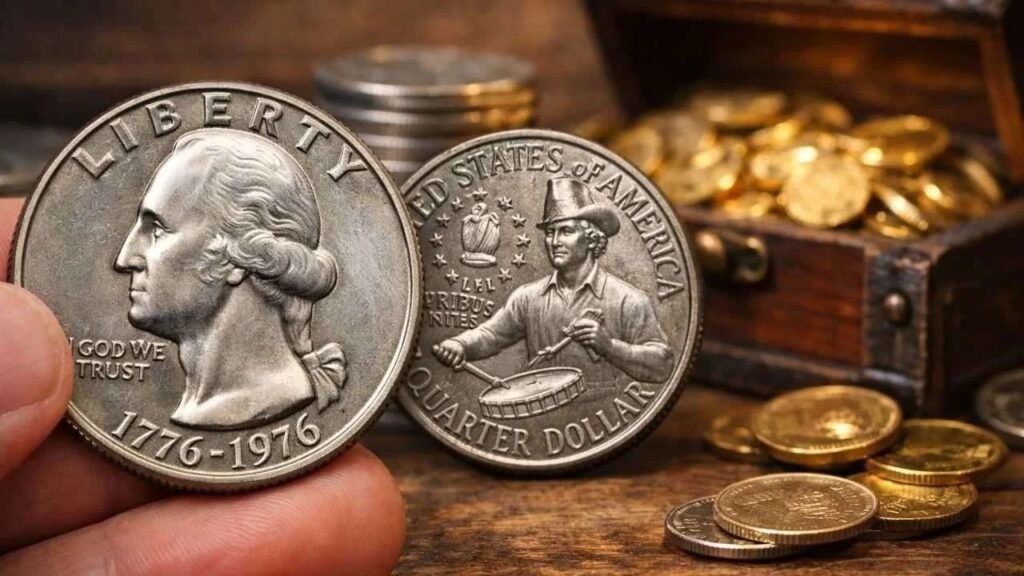
The 1976 Bicentennial Quarter remains one of the most iconic coins ever produced by the United States Mint. Struck to celebrate America’s 200th anniversary of independence, it stands out instantly due to its dual date “1776–1976” and its unique colonial drummer reverse design.
While most examples are still only worth face value, certain rare varieties—especially silver proofs, high-grade specimens, and dramatic mint errors—have become highly desirable in the collector market. In 2026, demand for these standout pieces continues to grow, with some reaching significant five-figure and even higher valuations.
This guide breaks down how to identify valuable Bicentennial quarters and what makes specific coins worth far more than twenty-five cents.
The History of the Bicentennial Quarter
The Bicentennial coin program was launched in 1975–1976 to commemorate 200 years of American independence. Instead of the traditional eagle reverse, the quarter featured a special design honoring the nation’s founding spirit.
The obverse still displays George Washington, maintaining continuity with standard U.S. quarters.
Design Symbolism
The reverse design, created by Jack L. Ahr, includes:
- A colonial drummer
- A torch surrounded by thirteen stars
- The dual date “1776–1976”
This imagery reflects unity, revolution, and national pride, making the coin one of the most recognizable modern U.S. issues.
Mint Locations and Coin Composition
Bicentennial quarters were struck at three U.S. Mint facilities:
- Philadelphia (P)
- Denver (D)
- San Francisco (S)
Two Main Composition Types
Understanding composition is essential when determining value:
- Copper-nickel clad (standard circulation coins)
- 40% silver (collector and proof versions from San Francisco)
Silver versions carry intrinsic metal value and are significantly more collectible than standard clad coins.
Why Some Bicentennial Quarters Are Valuable
Although billions were produced, only a small percentage carry premium value. Several key factors determine worth:
Silver Content
40% silver Bicentennial quarters were sold in special collector sets. These coins are scarcer and more desirable than circulation strikes.
Mint Errors
Mistakes during production can create rare and valuable varieties, including:
- Double dies
- Off-center strikes
- Wrong planchet errors
High-Grade Condition
Coins graded MS67, MS68, or higher often command strong premiums due to their scarcity in top condition.
Exceptional Eye Appeal
Proof coins with deep cameo contrast and flawless surfaces are especially attractive to collectors.
Rare Bicentennial Quarter Errors to Watch
Certain minting errors can dramatically increase value and collector demand.
Double Die Errors
Some Bicentennial quarters show doubling in the date or lettering. These errors are subtle and often require magnification to confirm.
Estimated 2026 Value:
$500 – $2,000+
Clear, well-defined doubling in high-grade coins can push values even higher.
Off-Center Strikes
Off-center errors occur when a coin is not properly aligned during striking, leaving part of the design missing.
The more dramatic the off-center strike—while still showing a readable date—the higher the value.
Estimated 2026 Value:
$1,000 – $3,000+
Wrong Planchet Errors
These rare coins were struck on blanks intended for other denominations, such as dimes or nickels. These are among the most sought-after Bicentennial errors.
Estimated 2026 Value:
$5,000 – $25,000+
Silver Proof Issues
San Francisco produced 40% silver proof Bicentennial quarters specifically for collectors. While most are moderately priced, top-tier examples in flawless condition are significantly more valuable.
Estimated Value:
$25 – $200 (standard silver proof)
$10,000 – $50,000+ (high-grade elite proofs)
2026 Bicentennial Quarter Value Chart
Below is a simplified reference guide for collectors and investors:
- Circulation Strike (Clad): $0.25 – $1
- Standard Proof Coin: $5 – $50
- 40% Silver Proof: $25 – $200
- Double Die Error: $500 – $2,000+
- Off-Center Strike: $1,000 – $3,000+
- Wrong Planchet Error: $5,000 – $25,000+
- High-Grade Silver Proof: $10,000 – $50,000+
- Exceptional Auction Rarities: $100,000 – $1,000,000+
Final values depend heavily on grading, authentication, and market demand.
How to Identify Valuable Bicentennial Quarters
Knowing what to look for can help collectors identify hidden value in everyday coins.
Check the Mint Mark
- “S” indicates San Francisco (often silver or proof)
- “P” or “D” indicates standard circulation coins
Mint mark location is essential for identifying silver proofs.
Weigh the Coin
Silver versions weigh slightly more than clad coins. A precision scale can help confirm composition differences.
Use Magnification
Examine the date and lettering carefully for signs of doubling or unusual spacing.
Inspect for Strike Errors
Misaligned designs, missing sections, or unusual shapes may indicate valuable mint errors.
Seek Professional Authentication
Certified grading from professional services helps confirm authenticity and maximize resale value.
Market Outlook for 2026
The Bicentennial quarter continues to hold strong collector interest due to its historical significance and patriotic design. While common examples remain abundant, rare varieties and high-grade silver proofs are increasingly sought after.
In 2026, demand is supported by:
- Growing interest in tangible assets
- Expansion of online coin marketplaces
- Strong competition for certified high-grade coins
As a result, verified rare examples continue to show steady appreciation.
Final Thoughts
The Bicentennial Quarter represents more than just commemorative currency—it is a symbol of American history and national pride. While most coins remain common, a select few carry significant numismatic value.
Silver proofs, high-grade specimens, and rare mint errors continue to attract serious collector attention in 2026. Identifying these coins requires careful observation, proper tools, and often professional authentication.
For collectors, the true excitement lies in the possibility that an ordinary-looking quarter could hold extraordinary value. In today’s market, knowledge remains the most powerful tool for discovering hidden numismatic opportunities.