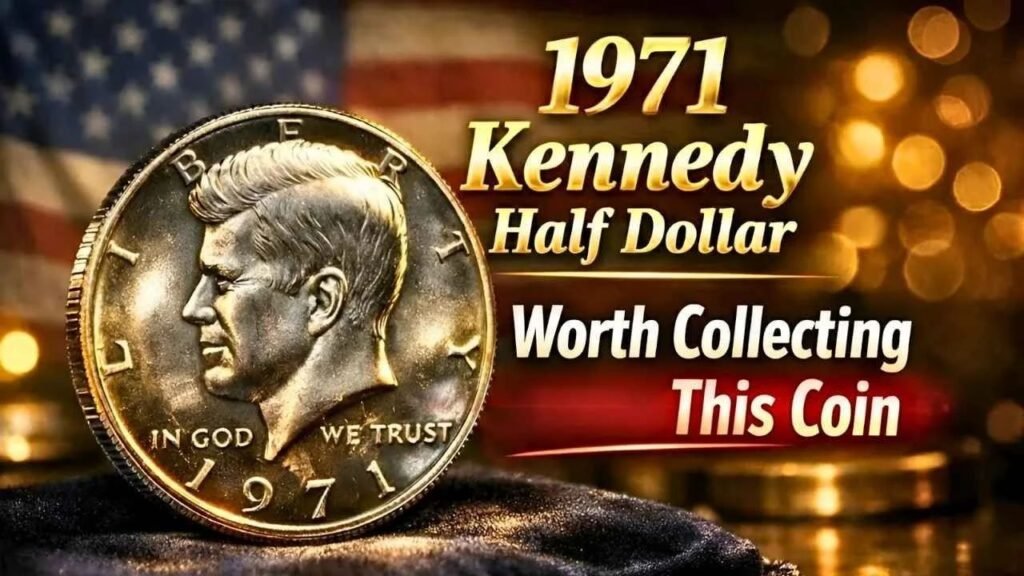
The 1971 Kennedy Half Dollar holds a special place in modern coin collecting. While it may appear to be an ordinary coin at first glance, it represents a pivotal shift in United States coinage history. Introduced during a time of economic transition, this issue marked the end of silver in circulating half dollars and the beginning of the modern clad era.
In 2026, collectors continue to explore the value potential of the 1971 Kennedy Half Dollar. Although most examples remain affordable, certain high-grade coins and error varieties have gained notable attention. For collectors seeking both historical significance and accessible investment opportunities, this coin remains a compelling choice.
The Historical Importance of the 1971 Kennedy Half Dollar
The Kennedy Half Dollar series was first released in 1964 to honor President John F. Kennedy following his assassination. The coin quickly became a national symbol and was widely saved by the public.
Between 1964 and 1970, Kennedy half dollars contained silver. However, rising silver prices made precious metal coinage increasingly impractical. By 1971, the United States Mint removed silver entirely from standard circulation half dollars.
This change marked a defining milestone. The 1971 issue became the first Kennedy Half Dollar struck exclusively in copper-nickel clad composition for everyday use. Today, this transition year stands as a key moment in modern numismatic history.
Design Features and Specifications
The design of the 1971 Kennedy Half Dollar remained consistent with earlier issues, preserving the iconic tribute to President Kennedy.
Obverse Design
The obverse features a left-facing portrait of President Kennedy. The design was created by Gilroy Roberts, whose work captured the dignified presence of the late president.
Key inscriptions include:
- LIBERTY
- IN GOD WE TRUST
- The date 1971
Philadelphia coins carry no mint mark, while Denver coins include a small “D” mint mark.
Reverse Design
The reverse, designed by Frank Gasparro, displays the Presidential Seal. At the center is a heraldic eagle holding arrows and an olive branch, symbolizing readiness for defense and commitment to peace.
This design remains one of the most recognizable elements of modern American coinage.
Technical Specifications
The 1971 Kennedy Half Dollar features:
- Copper-nickel clad outer layers
- Pure copper inner core
- Weight: 11.34 grams
- Diameter: 30.6 millimeters
Proof coins produced in San Francisco were created specifically for collectors and often display superior detail and mirror-like finishes.
Are 1971 Kennedy Half Dollars Valuable in 2026?
Most 1971 Kennedy Half Dollars remain common due to large production numbers. Millions were minted across multiple facilities.
Estimated mintages include:
- Philadelphia: Over 155 million coins
- Denver: Over 300 million coins
- San Francisco: Proof-only production
Because of these large quantities, circulated coins typically hold modest value. However, rarity emerges through condition and error varieties.
2026 Market Value Overview
Understanding realistic price ranges helps collectors make informed decisions. While everyday examples remain inexpensive, top-condition coins and rare errors command stronger premiums.
Typical value ranges in 2026 include:
- Circulated Philadelphia or Denver: $0.50 – $2
- Brilliant Uncirculated: $5 – $20
- MS65+ High Grade: $50 – $250
- 1971-D Double Die Obverse: $100 – $500+
- 1971-S Proof: $5 – $50
- 1971-S Silver Proof: $25 – $200
- Off-Center Error: $200 – $1,000
- Wrong Planchet Error: $1,000 – $5,000+
These values vary based on condition, certification, and collector demand.
Key Errors and Varieties to Watch
Error coins remain one of the most exciting aspects of collecting modern Kennedy half dollars. Several known varieties from 1971 attract consistent attention from collectors.
1971-D Double Die Obverse
The 1971-D Double Die Obverse is one of the most recognized varieties of the year. This error occurs when the coin design is impressed twice in slightly different positions during production.
Collectors should examine:
- The date “1971”
- The word “LIBERTY”
- The phrase “IN GOD WE TRUST”
True doubled dies show clear separation between letters and numbers. Machine doubling, which appears flat or smeared, is far less valuable.
Certified examples of this variety can command several hundred dollars depending on quality.
1971-S Proof and Silver Proof
San Francisco produced proof coins in two primary versions:
- Standard clad proof
- 40% silver proof
Silver proof coins were sold in collector sets and contain precious metal content. These versions often carry higher premiums, especially when graded in near-perfect condition.
High-grade proofs with strong eye appeal remain popular among modern collectors.
Off-Center Strike Errors
Off-center errors occur when the coin blank is not properly aligned during striking. The result is a coin with part of the design missing.
The value of these coins depends on:
- Percentage of off-center strike
- Visibility of the date
- Overall eye appeal
Dramatic examples with clearly readable dates often sell for hundreds of dollars or more.
Wrong Planchet Errors
Wrong planchet errors happen when a coin is struck on a blank intended for another denomination.
For example, a half dollar struck on a dime or nickel planchet creates a rare and visually striking collectible. These errors are scarce and often reach four-figure values when authenticated.
The Critical Role of Condition
Condition remains one of the most important factors affecting value in modern coins.
Unlike earlier silver coins that circulated heavily, many 1971 Kennedy halves were stored in large bags. This storage method often caused surface marks and minor damage.
As a result, pristine coins graded MS66 or higher are far less common than total mintage numbers suggest.
Registry-set collectors actively compete for top-grade examples, driving strong premiums for coins in exceptional condition.
Even small differences in quality can lead to large differences in price.
Collector Demand Trends in 2026
The 1971 Kennedy Half Dollar continues to attract diverse groups of collectors. Its affordability and historical importance make it appealing across experience levels.
Key collector groups include:
- Presidential history enthusiasts
- Modern coin registry collectors
- Error coin specialists
- Date-and-mint set builders
Because entry costs remain relatively low, many beginners choose this coin as a starting point. Meanwhile, advanced collectors pursue rare varieties and top-grade specimens.
Demand remains stable due to the coin’s historical significance and accessible price range.
Investment Perspective: Clad Coins vs. Silver Issues
One important distinction between 1971 Kennedy halves and earlier issues is the absence of silver in standard circulation coins.
Without precious metal content, the coin’s value depends entirely on rarity and condition rather than bullion value.
For investors focused on metal content, earlier silver Kennedy half dollars may provide additional stability. However, collectors interested in numismatic growth potential often find clad issues appealing due to their affordability and potential rarity in high grades.
In this sense, the 1971 issue offers a balanced opportunity for collectors who prioritize historical value and collecting enjoyment.
Smart Buying and Collecting Strategies
Collectors interested in acquiring a 1971 Kennedy Half Dollar can benefit from a disciplined approach.
Focus on coins with strong visual appeal. Bright surfaces, minimal marks, and well-defined details improve long-term desirability.
Use magnification tools to identify doubling or other small design anomalies. Proper examination helps distinguish valuable errors from common imperfections.
Always verify silver proof coins before paying premium prices. Certification ensures accuracy and protects against misidentification.
Avoid cleaned or polished coins whenever possible. Surface alteration significantly reduces collector value.
For high-value pieces, professional grading remains the safest method of authentication.
Why the 1971 Kennedy Half Dollar Still Matters
Beyond its monetary value, the 1971 Kennedy Half Dollar represents a significant turning point in United States coinage.
It marks the full transition from silver circulation coinage to modern clad production, reflecting changing economic realities of the era.
The coin also serves as a lasting tribute to President Kennedy. Although half dollars gradually faded from everyday use, the design remains a powerful reminder of national history.
Collectors appreciate the coin not only for its potential value but also for its symbolic meaning.
Final Takeaway
Most 1971 Kennedy Half Dollars remain widely available and modestly priced. However, beneath this common appearance lies genuine collecting potential.
High-grade examples, verified errors, and well-preserved proof coins offer meaningful opportunities for collectors in 2026. The absence of silver may limit bullion appeal, but it enhances the importance of rarity and condition.
For anyone building a thoughtful and historically meaningful coin collection, the 1971 Kennedy Half Dollar stands as a reliable and rewarding addition. It combines accessibility, historical importance, and long-term collecting appeal—qualities that continue to sustain its relevance in today’s numismatic landscape.