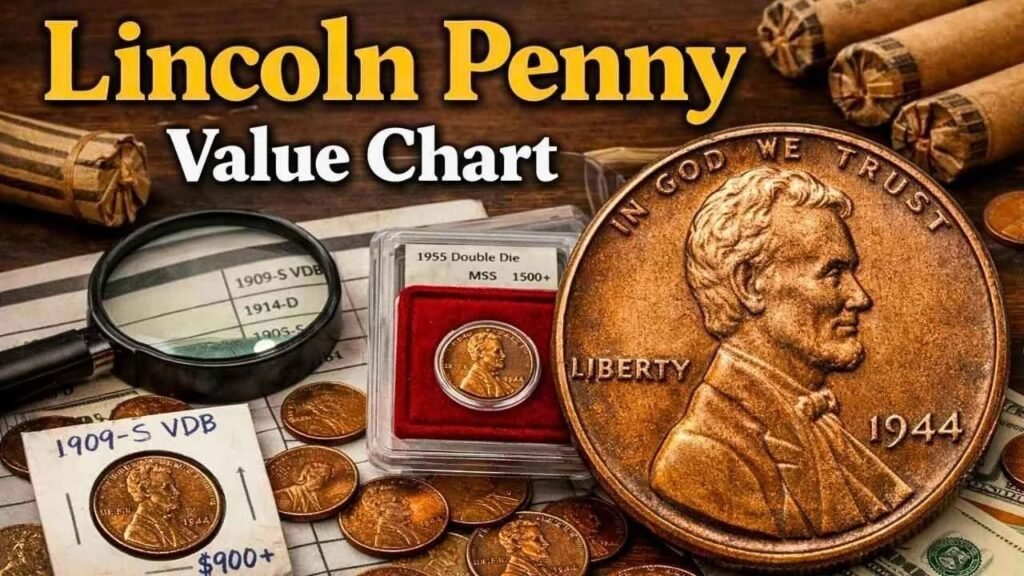
The Lincoln Penny remains one of the most enduring symbols in modern coin collecting. First introduced in 1909 to commemorate the 100th anniversary of Abraham Lincoln’s birth, this humble one-cent coin transformed American currency by featuring a real historical figure on everyday coinage.
More than a century later, Lincoln cents continue to command global attention. While billions of pennies have been minted, select examples—distinguished by rare mint marks, unusual compositions, or striking errors—can command remarkable premiums in the collector marketplace. In 2026, growing interest from investors and collectors alike has renewed focus on identifying high-value Lincoln pennies hidden among ordinary circulation pieces.
The Legacy Behind the Lincoln Penny
The Lincoln cent made history when it debuted in 1909, designed by sculptor Victor David Brenner. Its release marked a major departure from traditional coinage, replacing symbolic figures with the portrait of a respected national leader.
The obverse design featuring Abraham Lincoln has remained consistent over time, but the reverse design has evolved through several important phases.
Wheat Reverse Era (1909–1958)
Often referred to as Wheat Pennies, these early coins display two wheat stalks framing the denomination on the reverse. This design became an iconic representation of early American coinage.
Collectors particularly value Wheat Pennies because of their historical depth and the presence of several low-mintage key dates. Many of the most valuable Lincoln cents originate from this era.
Lincoln Memorial Era (1959–2008)
Introduced to celebrate Lincoln’s 150th birthday, this design featured the Lincoln Memorial on the reverse. During this long production period, numerous minor variations and mint mark differences created unique collecting opportunities.
Although many Memorial cents remain common, select dates with mint errors or rare variations have become highly desirable.
Union Shield Era (2010–Present)
Modern Lincoln cents now feature a Union Shield design symbolizing national unity and strength. While most modern pennies remain widely available, rare error coins and transitional issues continue to attract attention from advanced collectors.
Understanding Mint Marks and Composition
When evaluating Lincoln pennies, two key elements determine potential value: mint marks and metal composition.
Mint Mark Locations and Significance
Lincoln pennies are identified by small mint marks that indicate where they were produced:
- P — Philadelphia: Typically no mint mark before 1980; many common issues originate here.
- D — Denver: Frequently associated with mid-level mintage figures.
- S — San Francisco: Often carries premium value due to historically lower production numbers.
Coins from San Francisco, especially during the early 20th century, often hold strong collector appeal because of their relative scarcity.
The 1982 Composition Transition
One of the most important years in Lincoln cent history is 1982. This year marked the transition from traditional copper coins to copper-plated zinc composition.
Key differences include:
- Copper coins: Approximately 3.11 grams
- Zinc coins: Approximately 2.5 grams
Some rare crossover varieties were accidentally struck using older copper planchets after production changes began. These transitional coins remain among the most closely examined pennies in circulation.
Why Some Lincoln Pennies Are Worth Thousands
Not all rare coins look extraordinary at first glance. In many cases, value comes from subtle differences that require close inspection.
Low Mintage Numbers
Coins produced in smaller quantities naturally become harder to find over time. Limited production often leads to strong long-term collector demand.
Branch mints such as San Francisco and Denver produced several low-mintage issues that remain highly sought after today.
Mint Errors and Die Variations
Mint errors create unique coins that differ from standard production. These anomalies can include doubled lettering, missing mint marks, or unusual strike patterns.
Error coins are especially attractive because they are inherently scarce.
Condition and Professional Grading
Condition plays a decisive role in determining value. Professional grading services evaluate coins on a scale from 1 to 70, with higher grades commanding significantly higher prices.
Mint State coins with minimal wear can be worth exponentially more than circulated examples of the same date.
Historical Importance
First-year releases, controversial mint issues, and transitional designs often gain recognition over time. Coins associated with significant milestones tend to retain lasting demand.
The Most Valuable Lincoln Pennies in 2026
Several Lincoln penny varieties continue to dominate the collector market. These coins represent some of the most recognizable and valuable issues available today.
1909-S VDB
This coin is widely regarded as one of the most famous Lincoln cents ever minted. Featuring the designer’s initials “VDB” on the reverse, the coin sparked controversy shortly after its release.
With a relatively small mintage, high-grade examples remain exceptionally valuable. Premium specimens frequently exceed five-figure price levels in competitive auctions.
1914-D
The 1914-D penny represents a cornerstone of Wheat cent collecting. Its limited production numbers and widespread collector demand make it a classic key date.
Well-preserved examples continue to command impressive premiums.
1922 No D
All pennies produced in 1922 were struck at the Denver Mint. However, certain coins emerged without the expected mint mark due to die wear.
This unusual error transformed the coin into one of the most recognized Lincoln cent varieties.
1955 Doubled Die Obverse
Among the most dramatic mint errors in U.S. coin history, this coin displays strong doubling across the date and lettering.
Collectors actively pursue these coins because the doubling is easily visible without magnification.
1969-S Doubled Die
This rare variety features bold doubling on the obverse inscriptions. Authentic examples remain scarce and command premium prices due to their rarity and strong collector demand.
1972 Doubled Die
More accessible than earlier doubled die coins, the 1972 variety remains popular among collectors seeking historically significant error coins at comparatively approachable price points.
1982 Small Date Copper
During the metal transition year, certain coins were struck using copper planchets with a small-date design. These coins require careful weighing to verify authenticity.
Their rarity continues to drive collector interest.
1992 Close AM
A subtle but valuable variety, the letters “A” and “M” in the word “AMERICA” appear unusually close together on the reverse.
Although difficult to detect, authenticated examples can command strong premiums.
1995 Doubled Die
This modern-era error provides an accessible introduction to doubled die collecting. Visible doubling in the inscriptions makes identification easier than many earlier varieties.
2026 Lincoln Penny Value Overview
Market ranges vary depending on condition, grading certification, and collector demand. However, the following general value trends remain relevant in 2026:
- 1909-S VDB: $700 to $15,000 or more
- 1914-D: $300 to $20,000 or more
- 1922 No D: $500 to $25,000 or more
- 1955 Doubled Die: $1,000 to $25,000 or more
- 1969-S Doubled Die: $10,000 to $100,000 or more
- 1972 Doubled Die: $100 to $500 or more
- 1982 Small Date Copper: $50 to $1,000 or more
- 1992 Close AM: $500 to $5,000 or more
- 1995 Doubled Die: $20 to $200 or more
These values reflect broad market trends rather than guaranteed prices, as individual coins vary widely in quality and demand.
Smart Collecting Strategies for Modern Investors
Successful coin collecting blends curiosity with discipline. Strategic choices can significantly improve long-term value potential.
Inspect Coins Carefully
Use a magnifying lens to examine lettering, mint marks, and date details. Subtle visual clues often separate common coins from valuable discoveries.
Verify Valuable Finds
Professional authentication confirms legitimacy and enhances market confidence. Certified coins typically achieve stronger resale performance.
Protect and Preserve Condition
Store coins in archival-quality holders to protect against moisture, air exposure, and handling damage. Preservation plays a major role in maintaining long-term value.
Build a Focused Collection
Rather than accumulating large numbers of common coins, many experienced collectors prioritize acquiring fewer, higher-quality pieces with proven demand.
The Investment Perspective on Lincoln Pennies
Rare Lincoln pennies have evolved beyond simple collectibles. They are now widely viewed as tangible assets with historical significance and potential investment value.
In diversified portfolios, rare coins provide:
- Long-term appreciation potential
- Protection against currency fluctuations
- A physical store of value tied to history
As alternative investments gain popularity in 2026, numismatic assets continue to attract global attention from collectors and financially sophisticated investors.
Final Thoughts
The Lincoln Penny represents more than spare change—it embodies history, craftsmanship, and enduring cultural significance. While the majority of pennies remain worth only face value, select rare dates and mint errors hold remarkable financial potential.
For collectors, the appeal lies in discovery. A small coin tucked away in storage or circulation could represent a meaningful addition to a portfolio or collection.
With knowledge, patience, and attention to detail, the Lincoln Penny continues to offer opportunity, fascination, and lasting value well into 2026 and beyond.